

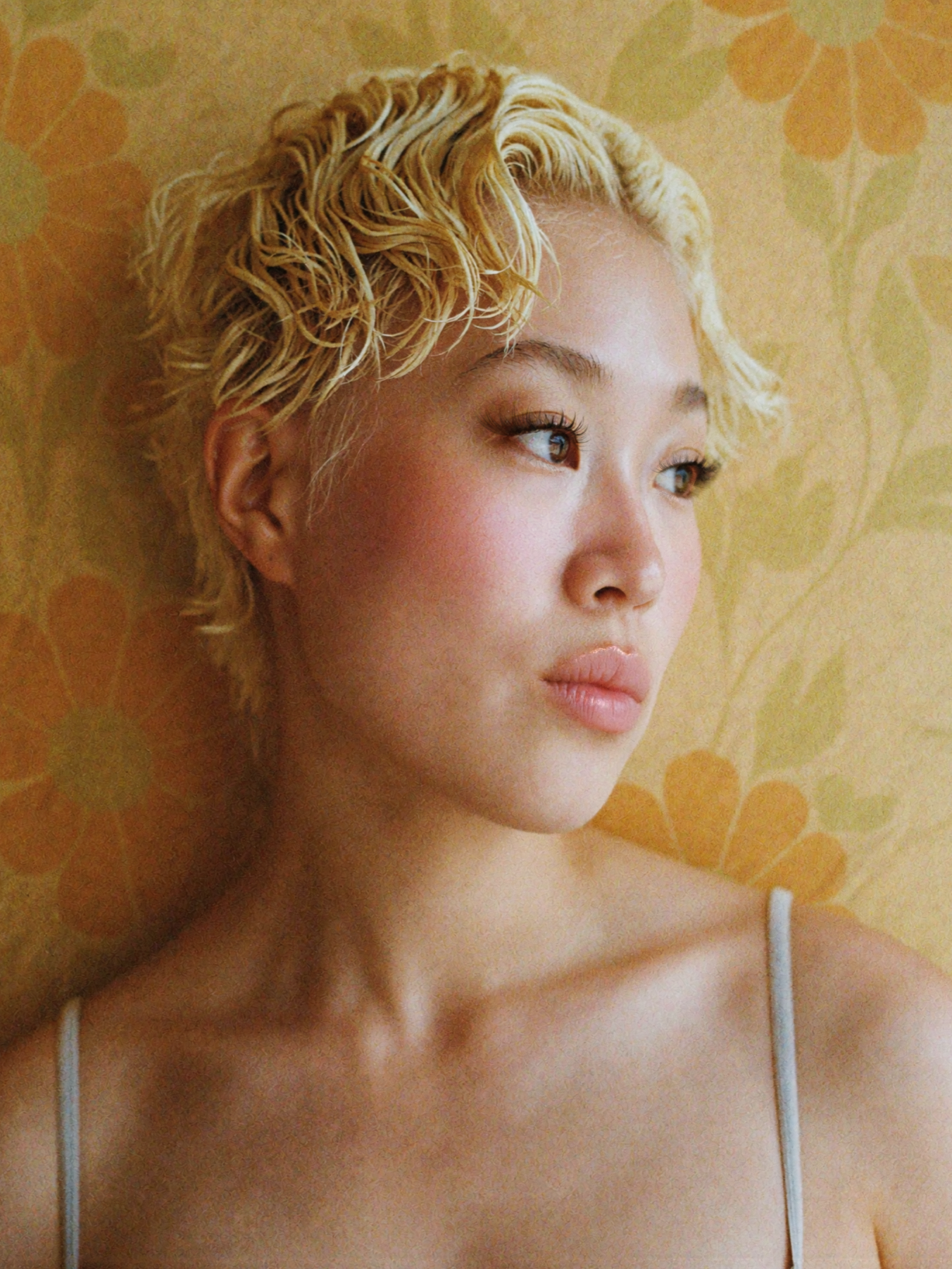
bio.
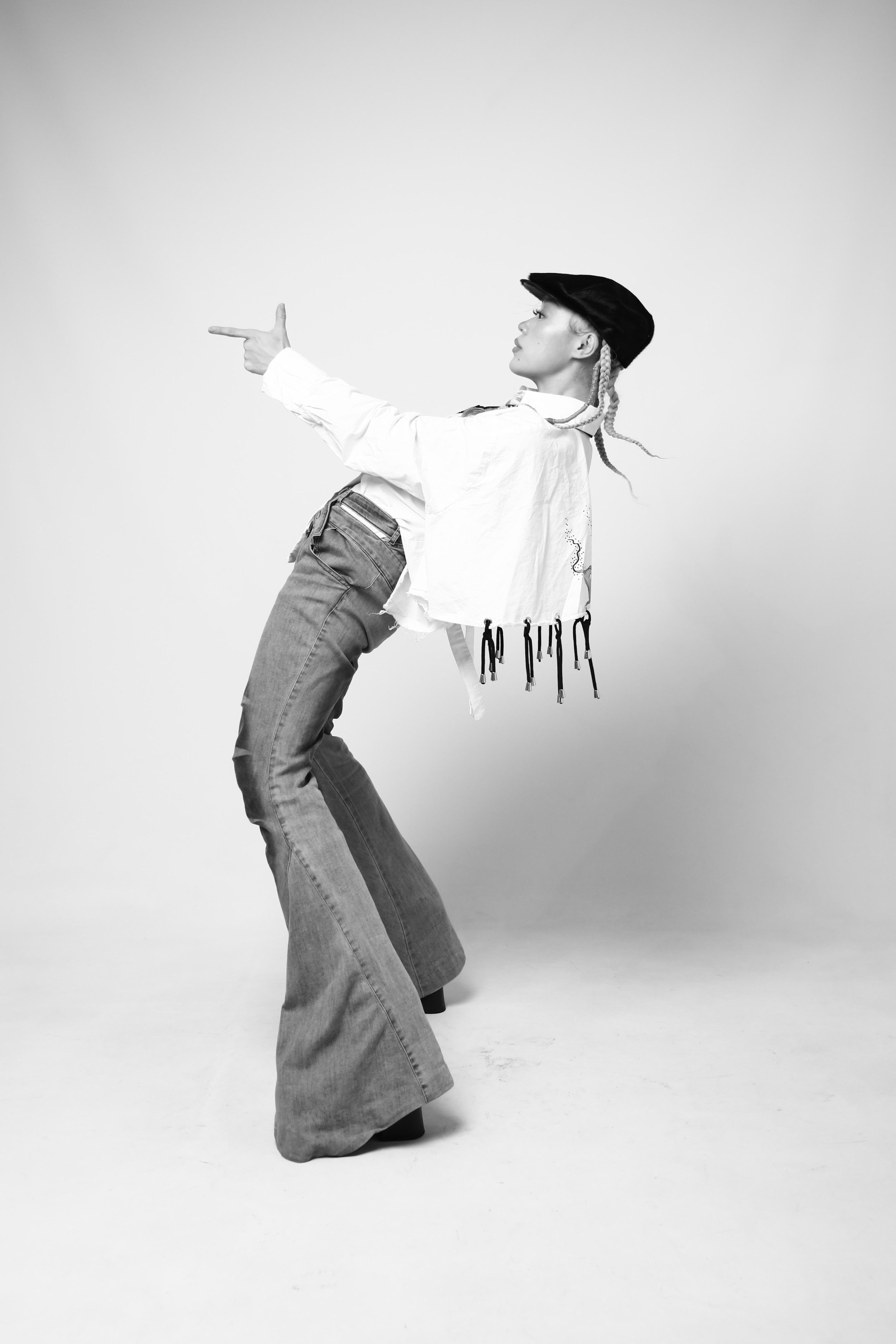
RiRia is a “Made in Tokyo, product of LA” actor, artist, and musician whose work moves across performance, film, television, music, design, and emerging forms of creative practice.
RiRia is a Tokyo-born, Los Angeles-based actor, artist, and cultural strategist whose multidisciplinary practice spans music, film, performance, visual culture, fashion, and experimental storytelling.
Her creative life began with classical music. RiRia started playing the flute at age seven and entered the professional classical world in Japan at an unusually young age. At 14, she recorded flute for music used by Japanese figure skater Mao Asada in connection with the 2010 Vancouver Winter Olympics. In 2011, RiRia became the youngest winner of the second Maxence Larrieu International Flute Competition. The following year, at 17, she moved alone from Tokyo to Los Angeles.
Rather than remaining within a single discipline, RiRia used Los Angeles as a place to continually expand her artistic language. As an actor, her credits include HBO’s Hacks, Hulu’s Dollface, HBO’s Euphoria, and the feature film Bullet Train, alongside music videos, commercial campaigns, and collaborations across entertainment and fashion.
Beyond performance, RiRia’s creative practice extends behind the camera, where she develops projects from initial concept through final execution across film, music, fashion, and visual culture. Her work often combines image-making, storytelling, performance, and creative direction rather than treating them as separate disciplines. In 2024, she created a project for Toyota SUPER FORMULA’s DIRECTORSCUT, with her multidisciplinary approach subsequently featured in a dedicated VOGUE JAPAN interview. Her broader creative collaborations have included work with CL, CASIO, Cathay Pacific, MIYAVI, and other artists and global brands.
In 2026, RiRia was featured in the Los Angeles Times IMAGE Makers issue as an actor, artist, and collector of Japanese fashion. Photographed inside her Los Angeles home, the story explored her decades-spanning collection of Japanese designers and the way clothing, objects, music, and space function as extensions of memory and identity. Her work often lives in that same territory: between Tokyo and Los Angeles, classical discipline and experimentation, performance and documentation, the finished object and everything that happened before it existed.
RiRia is also the founder of MA, an intentional digital museum conceived as a space for preserving and exhibiting process, memory, failure, conversation, and unfinished thought rather than only polished outcomes.
Across disciplines, her practice is less concerned with choosing a single medium than with asking what form an idea needs to take.
time line.
-
Born in Tokyo
-
Begins playing the flute at age seven, after several years of studying recorder in preparation for the instrument.
-
One year after beginning the flute, wins Second Prize at the Japan Classical Music Competition National Finals, with no First Prize awarded.
The result turns what had begun as a childhood hobby into the beginning of a serious musical career.
-
Returns to the same competition the following year and wins the Grand Prix, selected from among first-prize winners across divisions.
-
Gains attention in Japan for repeatedly becoming one of the youngest prizewinners in national competitions.
Appears on TV Asahi’s long-running classical music program Daimei no Nai Ongakukai (“Untitled Concert”), performing with an orchestra and beginning her professional career as a classical flutist while still in elementary school.
-
Competes internationally for the first time in Croatia and wins.
A trip to the opera in Austria following the competition becomes an early catalyst for a new ambition: to someday become a Hollywood actor.
-
Discovers Michael Jackson and begins teaching herself dance.
The encounter fundamentally expands her idea of performance beyond classical music and strengthens her decision to eventually move to the United States.
Around this period, she begins performing “Dancing Flute,” combining flute performance with movement and dance on Japanese television and other stages.
-
Appears on TV Tokyo’s Takeshi no Dare Demo Picasso, where she tells filmmaker Takeshi Kitano that she intends to become a Hollywood star.
Enrolls at the Music High School Attached to the Faculty of Music, Tokyo University of the Arts.
-
At sixteen, wins the 2nd Maxence Larrieu International Flute Competition in Nice, France, becoming the competition’s youngest winner.
The victory becomes the turning point that makes her long-planned move to the United States possible.
-
Moves alone from Tokyo to Los Angeles at seventeen.
Continues her music education while attending school in the United States, gradually beginning to imagine a creative life beyond the classical concert world.
-
Begins appearing in music videos and smaller screen projects in Los Angeles while navigating the limitations of student life in the United States.
This period marks the beginning of her transition from classical musician to screen performer.
-
Receives her green card and leaves music school the same day.
After appearing in a web campaign for Oculus, signs with representation and begins pursuing acting professionally in Los Angeles.
-
Appears in three U.S. national television commercials in a single year.
Her work includes a United Airlines campaign in which she appears as a Japanese musician performing the shinobue.
-
Cast in major television productions including HBO’s Euphoria and Hulu’s Dollface.
Featured in Tiger Beer’s international campaign through her signature Dancing Flute performance, bringing together the instrument she began as a child and the movement practice she developed as a teenager.
Begins performing professionally as a drummer, appearing with Idina Menzel and later performing with her on the America’s Got Talent stage.
Appears in a national Jägermeister campaign alongside Post Malone.
Also appears on Japanese television program Matsuko Kaigi.
-
Expands decisively into authorship and production.
Contributes lyrics and production to “TPIR,” the collaboration between MIYAVI and KANGDANIEL, and later designs merchandise for MIYAVI’s U.S. tour.
Makes a cameo appearance in the feature film Bullet Train.
Makes her debut as a photographer on a CASIO global campaign.
-
Appears as Cherry in Hulu’s Dollface and works as a model on a beauty project connected to Beyoncé’s haircare brand.
Invited to Hong Kong for the global launch of ONE by Penfolds, the collaboration between NIGO and Penfolds, and is interviewed by Hypebeast around the project.
Appears at SIGGRAPH, one of the world’s leading conferences for computer graphics and interactive technologies, as part of its creator programming.
Creates a web commercial for Cathay Pacific, further expanding her work behind the camera.
By this point, her creative practice spans acting, directing, photography, design, music, fashion, and emerging technology.
-
Appears as Claudette in HBO’s Hacks.
Reunites on screen with Beyoncé through Verizon’s Super Bowl campaign.
Creates a film for TOYOTA DIRECTORSCUT / TOYOTA GAZOO Racing SUPER FORMULA, working across concept, production, direction, editing, and performance.
Her career from classical musician to actor and multidisciplinary artist becomes the subject of a solo VOGUE JAPAN feature.
-
Begins developing MA (間), an intentional digital museum that transforms thoughts, memories, objects, emotions, discoveries, failures, and creative processes into exhibitions.
The project includes a visual podcast built around conversations between “Real RiRia” and her digital counterpart, exploring identity, memory, technology, and the increasingly porous boundary between physical and digital life.
At the same time, her Los Angeles home and creative headquarters, Miracle Park, evolves into what she describes as an “obscure museum”: a living environment in which Japanese designer fashion, collected objects, self-built furniture, installations, music, food, technology, and human interaction continuously become material for new work.
-
Forthcoming: RiRia is featured in the Los Angeles Times’ fashion, art, and culture publication IMAGE.
The story explores her collection of Japanese designer fashion and objects, and the way she recontextualizes them within Miracle Park, turning collecting, domestic space, and everyday life into extensions of her artistic practice.